


ParkMyRig, Truck Parking Guide
ParkMyRig LLC
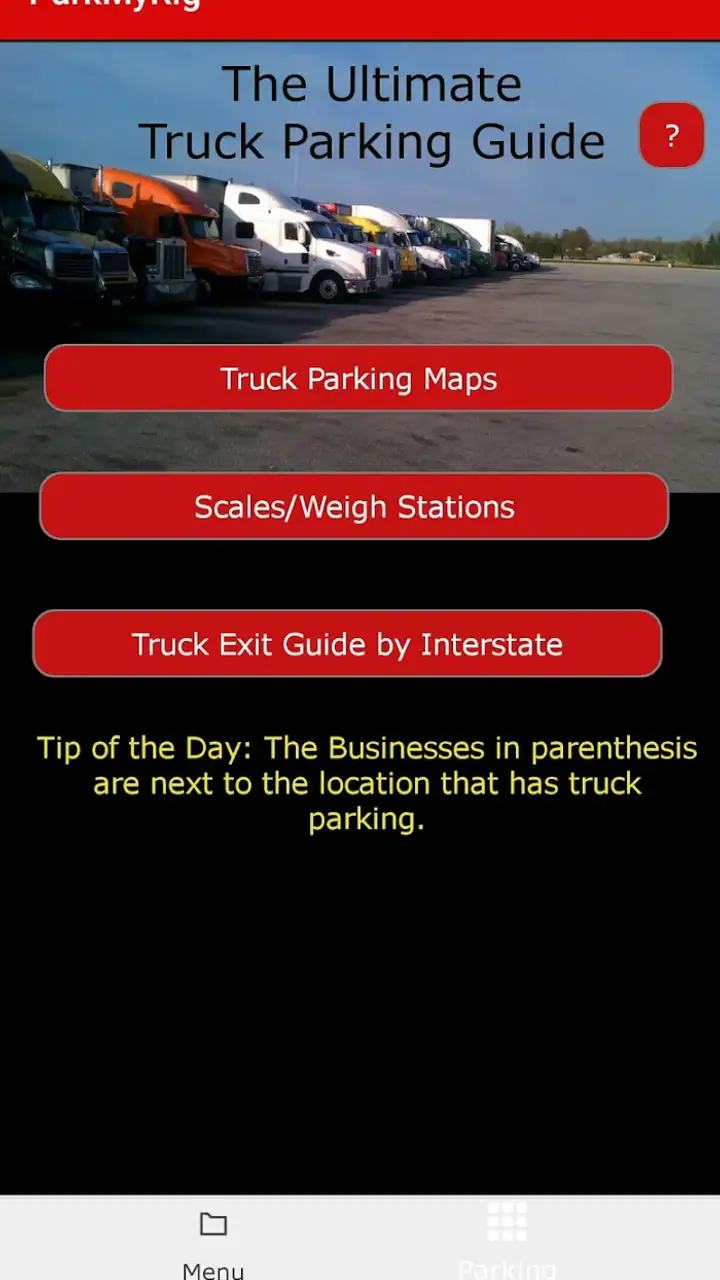
Finding a legal, usable place to stop a truck is a very different problem from finding a car park. A standard map can point me toward fuel, food, or a general parking area, but it does not always answer the question that matters most to a professional driver: can I realistically get my rig in, leave it there, and continue the trip without wasting time? ParkMyRig approaches that specific problem as a Travel & Local app built around truck parking information and an exit guide.
I see the app as a practical companion rather than a complete navigation replacement. Its value is greatest before I reach an unfamiliar interchange, when I still have enough time to compare options and adjust my route. The developer is ParkMyRig LLC, and the app is free to install, with optional in-app purchases ranging from $2.49 to $24.99 per item. That combination makes it easy to try, although drivers should still decide whether the paid additions fit their particular routine.
How ParkMyRig fits into a real driving day
My preferred way to use a truck parking guide is not to wait until I am already tired and looking for somewhere immediately. I would check it earlier in the journey, identify a few possible stopping areas, and keep the truck exit information in mind before committing to a location. That small change in workflow is important because the nearest listed place is not automatically the best choice for a long vehicle.
A realistic example would be an evening delivery run through an unfamiliar region. I might know the general direction from a regular navigation app, but the final decision about where to stop depends on truck suitability and how easily I can get back onto the road. ParkMyRig gives that decision its own space. I can use the parking information to narrow my choices, then use the exit guidance as a second check instead of treating the destination as the end of the problem.
The most useful habit is to plan the exit at the same time as the stop. Drivers often focus on entering a parking area and forget that a difficult departure can cost just as much time as a difficult arrival. A guide that keeps both parts together is more relevant to truck work than a generic list of nearby places.
Related News

Why WhatsApp Messenger Still Makes Everyday Communication Feel Easy

Jurassic World: The Game Is the Better Dino Tycoon for Strategic Players

Threads in Real Life: Who Should Join, Lurk, or Leave

How SHEIN Turned Shopping Into an Endless Content Feed

How to Make Fortnite Feel Smarter on Mobile

Should You Switch to Microsoft Outlook on Mobile?
Speed expectations when I need an answer quickly
ParkMyRig is most helpful when I approach it with a clear question: where can I investigate a truck parking option, and how will I get out afterward? That focused purpose makes the experience easier to understand than a broad travel app filled with unrelated attractions. I would not expect it to replace turn-by-turn navigation or provide every piece of trip planning in one place. Its role is narrower, and that is also its strength.
In a normal planning moment, I would rather review a small set of relevant truck stops than scroll through every nearby business. The app’s truck-specific focus can reduce the mental work involved in separating useful results from places intended mainly for cars. That does not mean every result will suit every rig, so I still treat the information as a planning aid and not as permission to ignore posted signs or local restrictions.
The free entry point also lowers the risk of testing it during a quiet planning session. I can see whether its approach matches my routes before making any decision about optional purchases. For a driver who only occasionally needs truck parking information, that trial-first approach is sensible. For someone who needs a highly detailed, constantly updated professional routing system, expectations should be more measured.
Gallery
What happens during heavy-use moments
The most demanding moment is not necessarily when the app is opened at home. It is when I am tired, under time pressure, dealing with a large vehicle, and trying to make a decision near the end of a driving period. In that situation, a parking guide needs to be quick to understand. Long searches, unclear entries, or an exit description that requires too much interpretation would reduce its practical value even if the underlying idea is good.
I would use ParkMyRig before that stressful moment whenever possible. A quick review during a fuel stop or break lets me compare the next likely stopping areas while I still have attention available. I could note the preferred option, keep a backup in mind, and avoid making the entire decision after reaching a crowded area. This is one of the less obvious advantages of a dedicated guide: it encourages earlier planning instead of last-minute searching.
There is also a useful trade-off here. A specialist app can be less distracting than a general travel platform because the subject is limited to truck parking and exits. At the same time, a narrow app may leave me needing another tool for live traffic, road closures, fuel prices, weather, or detailed navigation. I would therefore use it alongside my normal driving setup, not expect it to carry the whole trip.
For a team driver or fleet routine, the app could also serve as a shared reference point for discussing stopping choices. One person can review a possible location while another handles the broader route plan. That division is more practical than trying to make one application answer every question at once. It also reduces the chance that a driver will search for parking while actively handling the vehicle.
Reliability and how I would verify a result
A parking guide earns trust through usefulness over repeated trips, but I would still verify important details in the real world. Parking availability can change, entrances can be restricted, and a location that works for one truck may be awkward for another. ParkMyRig can help me identify where to investigate, yet I would pay attention to signs, local rules, operating conditions, and the physical layout when I arrive.
The exit guide deserves particular attention. I would read it before entering rather than waiting until departure, especially if the stop is near a complicated junction. Knowing the intended way out can influence whether I choose that stop at all. If the departure requires a turn that is uncomfortable for my trailer, or if the route seems unsuitable for the vehicle, I would select a backup before parking.
This is also where I would avoid overconfidence. A guide can organize information, but it cannot remove the need for judgment. A driver carrying a long trailer, operating in poor weather, or dealing with a tight schedule should allow extra time and confirm the situation locally. The app is more reliable as a decision-support tool than as a guarantee that every listed option will be available or convenient at the exact moment of arrival.
The published user response gives the app an average rating of 4.1 from around 140 ratings, with over 100 written reviews. I read that as a sign of useful appeal, but not as a reason to stop checking conditions myself. The audience is relatively specific, so personal route experience matters more than a single overall score.
Device constraints and everyday practicality
ParkMyRig supports devices running iOS 8.1 or later, which makes its minimum system requirement relatively approachable for people using older compatible hardware. That matters in trucking, where a phone may be kept for a long time as a dedicated work device rather than replaced every year. A driver who uses an older phone can still consider the app without needing the newest hardware.
The app is rated for Everyone, so its presentation is not aimed at a restricted age group. That does not change the need for safe use: I would never browse parking information while moving. The best workflow is to check it while stopped, have a co-driver handle the search, or prepare the information before departure.
Because this is a focused travel utility rather than a large entertainment app, I would expect it to be easier to fit into a working phone setup than a resource-heavy general platform. Still, I would not make a precise claim about battery use, storage, or loading time without measuring the exact device and connection. In practice, the bigger constraint is likely to be the quality of the information available for a particular route and the driver’s ability to review it safely.
The current version is 1.0.49, and the app has passed the ten-thousand-install mark. Those details suggest that it has found a real audience without making it a mainstream navigation service. I would interpret that scale as another reason to test it personally on familiar routes first. If it consistently helps with decisions I already make, it has earned a place in my travel toolkit; if my routes do not match its strengths, the install count alone would not change my conclusion.
Where it beats ordinary alternatives
A regular map application is excellent for showing roads, businesses, and general directions, but I often have to translate that information into a truck driver’s decision. A place may appear nearby while still being inconvenient for a large vehicle, and the map may not make the departure route obvious. ParkMyRig starts from the more specific problem of truck parking, which saves me from filtering out irrelevant car-oriented results.
That specialization is especially valuable when I am planning around an exit rather than simply searching for a destination. Instead of asking only “where is the closest place to stop?”, I can think in terms of “which option gives me a manageable stop and a sensible way back onto the road?” That is a more useful question for a professional driver.
On the other hand, a general navigation app remains better for live routing and the complete journey. It can usually handle the road from my current position to the next destination, while ParkMyRig is better suited to the parking decision itself. I would not choose between them as if only one could exist on my phone. The sensible combination is broad navigation for movement and this specialist tool for truck-stop planning.
Dedicated trucker communities or fleet systems may be preferable for drivers who need extensive current reports, operational coordination, or a wider range of vehicle-specific details. ParkMyRig is a better fit for someone who wants a direct parking-and-exit reference without turning the whole experience into a large social or fleet platform. That simplicity can be an advantage, provided its coverage and detail match the routes I actually drive.
Three workflows that make the app more useful
First, I would build a two-option plan before entering a busy area. I would select a preferred parking location, then inspect a second option far enough away to remain realistic. This avoids treating the first result as a promise. If the primary place is full or awkward, I already have a direction to consider instead of beginning a new search when fatigue is highest.
Second, I would check the exit before checking in. That sounds obvious, but it changes the decision. A parking area can look convenient from the arrival side while creating a poor departure for a long vehicle. Reviewing the exit early lets me reject a questionable option before I have invested time reaching it.
Third, I would use the app as a pre-trip filter rather than a live distraction. Before leaving, I would identify the likely stopping corridor and make a short mental note of the relevant options. During the journey, I would only revisit the plan while safely stopped. This workflow gives the app a practical role without encouraging rushed phone use behind the wheel.
A fourth useful approach is to compare the app’s guidance with personal experience after the trip. If an exit feels tighter than expected, or a location works particularly well for a certain trailer, I would remember that for future planning. The app supplies structure, while repeated driving supplies the judgment that no static guide can replace.
Who should use it, and who should skip it
I would recommend ParkMyRig to long-haul drivers, occasional rig operators, and anyone who regularly travels through unfamiliar areas with a vehicle too large for ordinary parking assumptions. It is also a reasonable tool for a driver who already has a favorite navigation app but wants a more focused way to think about stopping and leaving.
It may be less useful for someone who drives only a car, rarely travels beyond familiar streets, or expects one app to provide live traffic, complete navigation, fuel planning, and every operational detail. In those cases, a general map or a broader trucking platform may be a better primary choice. The specialist focus is helpful only when truck parking is genuinely part of the problem.
I would also hesitate to rely on it as the sole authority for a high-stakes schedule. If missing a stop would create a serious operational issue, I would plan earlier, keep a backup, and confirm conditions through the normal checks required for the route. The app can improve preparation, but it should not replace safe driving decisions or local awareness.
My performance verdict after weighing the trade-offs
ParkMyRig makes sense because it concentrates on a problem that ordinary travel apps often handle indirectly: finding truck parking and understanding the exit afterward. I like that its usefulness begins before arrival, when I can compare options and avoid turning a tired end-of-day search into a rushed decision. The free price makes experimentation straightforward, while the optional purchases mean I would evaluate the extra value against how often I drive routes that need this kind of help.
My view of its speed and stability is practical rather than absolute. I would expect the focused design to feel more manageable than a broad travel platform, but the real test is whether it gives me clear information at the moment I need it. I would judge it on how quickly I can find a relevant option, how easy the exit guidance is to interpret, and whether it remains useful across my regular routes. Those are more important measures than a flashy interface.
There is no reason to install it simply because it is a travel app. Install it if truck parking and departure planning repeatedly create friction in your day. For that audience, ParkMyRig is a focused planning aid, not a replacement for navigation or driver judgment. I would keep it as a supporting tool, use it before stressful parking moments, and verify the final situation on site.
Overall, I would recommend giving it a careful trial if you drive a rig and often need to stop in unfamiliar places. Its strongest idea is the connection between parking and the way out, and that is exactly the detail that generic alternatives can overlook. The app will not solve every route problem, but used early and sensibly, it can make one of the most tiring parts of a driving day easier to plan.
For readers deciding whether it belongs on a work phone, my answer is simple: choose this app when truck-specific parking decisions matter more than having one all-purpose travel dashboard. Its Everyone rating, approachable system requirement, and established presence on Android make it easy to test, while the real value will come from matching it to your routes and using it as part of a safer, broader planning routine.
FAQs for ParkMyRig, Truck Parking Guide
What is ParkMyRig, Truck Parking Guide?
ParkMyRig, Truck Parking Guide is designed to help truck drivers find and evaluate suitable parking locations during a journey. It can be useful for planning rest stops, checking available facilities, and reducing the time spent searching for a safe place to park. Before downloading, remember that coverage and listing accuracy may vary by region and depend on user or provider updates.
Is ParkMyRig useful for long-haul truck drivers?
The app is primarily aimed at drivers of heavy vehicles who need reliable parking information on longer routes. It may help with trip preparation and locating potential overnight or break-time stops, especially when parking availability is limited. Its usefulness depends on how extensively your route is covered, so it should complement—not replace—official road signs, dispatch instructions, and local parking regulations.
Does ParkMyRig show real-time parking availability?
You should not assume that every location displayed in ParkMyRig has guaranteed real-time availability. Parking information can change quickly because spaces fill up, facilities close, or restrictions are introduced. If the app provides status updates, they may depend on recent reports or connected data sources. Always verify important details, including opening hours, vehicle restrictions, fees, and current conditions, before committing to a stop.
Can ParkMyRig be used offline or without mobile data?
Offline functionality may be limited, so drivers should check the app’s current features and download requirements before starting a trip. Maps, parking details, directions, and updates may require an internet connection or location services. For routes through rural areas or places with weak reception, it is sensible to prepare stops in advance, save essential information where possible, and keep a backup navigation method available.
Is ParkMyRig free to download, and are there any extra costs?
The download price and available features may differ between Android and iOS, and some functions could require in-app purchases, a subscription, or access to premium information. Check the store listing carefully for pricing, renewal terms, supported devices, and privacy permissions before installing. Also remember that parking fees, tolls, fuel costs, and charges from individual facilities are separate from any app-related payment.
Pros
- Helps drivers locate truck-friendly parking areas more quickly.
- Useful for planning stops before reaching busy or unfamiliar locations.
- Focuses on spaces suitable for larger commercial vehicles.
- Can reduce time spent searching for a safe place to park.
- Practical reference for long-haul drivers and fleet operators.
Cons
- Parking availability may change before you arrive.
- Coverage can vary significantly between regions.
- Some listings may lack current pricing or restriction details.
- It may not guarantee a reserved parking space.
- Requires careful checking of local rules and access limitations.


